
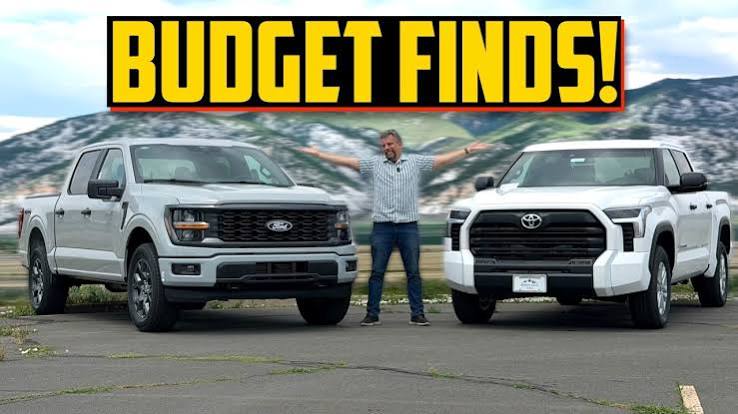
Have you ever stopped to wonder why so many suburban commuters favor massive vehicles for stop-and-go driving? Buyers routinely pay $30,000 to $50,000 extra for fully loaded pick-up trucks that sport roaring, vibrating V-8 engines. Yet the drivers spend their time in traffic and seldom, if ever, venture off-road or need to tow.
This year the V-8 pickup truck is having a heyday. In fact, manufacturers are retooling their production lines to keep up with demand. U.S. automakers do so willingly since the larger vehicles yield larger profit margins.
Loophole from the 1970’s:
The push toward “bigger is better” has a distinct origin. Back in the 1970’s, most people drove sedan vehicles. However, the Corporate Average Fuel Economy (CAFE)/EPA regulation created a loophole for “light trucks.” Automakers without the exemption faced regulatory fines.
The automakers began vast campaigns to convince drivers to favor pick-up tricks or large sport utility vehicles (SUV) as both qualified under the loophole. Their efforts paid off with the success of the 1991 Ford Explorer, Ford Bronco, and similar models.
The silver lining was that it was profitable. Over time, Ford, for one, has phased out traditional passenger cars like the Fiesta, Focus, Fusion, and Taurus, leaving the Mustang as its only non-SUV/truck lineup.
But there are a couple of reasons that big SUVs are not necessarily the consumer’s car of choice. These larger vehicle are seemingly safer for the occupants and provide them a panoramic view. However, they are also responsible for a soaring fatality rate for pedestrians and bicyclists. Bigger vehicles are expensive to insure, to fuel up and have higher repair costs. Many are oversized for conventional garages and parking spaces.
Why Automakers Spend Billions…
Continuing to “tell” consumers that the big SUV or pick-up truck is the vehicle they “choose to want” requires some heavy-duty marketing artillery. Here are specifics:
Currently, Ford Motor spends roughly $100 per F-150 sold in North America on media buys. This is reserving just the media media space across YouTube, streaming, and digital platforms. Ford sells about 700,000 F-150 vehicles annually, and they reach these customers across a multitude of channels. Investing $100 per vehicle in direct ad buys is a tiny customer acquisition cost with a massive return.
However, that is only a sliver of the Ford artillery since they also have to “make the message” (i.e. the ads). Publicly reported data and executive statements (such as Ford CEO Jim Farley’s widely cited 2022 comments) leads to the inference that the total ad spend is $500 to $700 per vehicle (which equates to roughly $2 billion to $3 billion annually).
The EV less loophole:
It’s a different story, with a lot less firepower, when it comes to developing market demand for electric vehicles. First, the legacy brands like BMW, and often General Motors, handle electrification by promoting their models alongside gas counterparts. That normalizes EV options across their core lineup.
Tesla, which only builds electric sedans and the popular Y model SUV, has the highest sales but the tiniest marketing budget. In fact, they do not have any marketing or advertising department at all. Media Radar cites in the Wall St. Journal that that Tesla spent only $6.4 million to $10 million in 2023. That works out to roughly$10 to $15 per vehicle across its ~634,000 domestic sales. That, if true, is miniscule, compared to Ford’s investment in F-150 promotions.
Channel the Consumer?
You have to wonder what the response would be, if Tesla and other EV manufacturers supported an annual promotion campaign like the one for the F-150? What if EV makers could channel consumer demand with this message: quiet and smooth, high-torque vehicles that rarely require dealership repairs.
While U.S. auto manufacturers scale back EV initiatives they claim they are retreating to gas vehicles because “the market has spoken.” But they ignore their own influence. Automakers spend millions to persuade buyers that a heavy, gas-burning, engine roaring V-8 is a preferred option.
Put differently, do manufacturers of the F-150 spend at least $300 to $500. per vehicle not to react to public taste, but rather to defend and protect their high-margin market…meanwhile staving-off newer technology? It’s a hidden headline in front of us.