
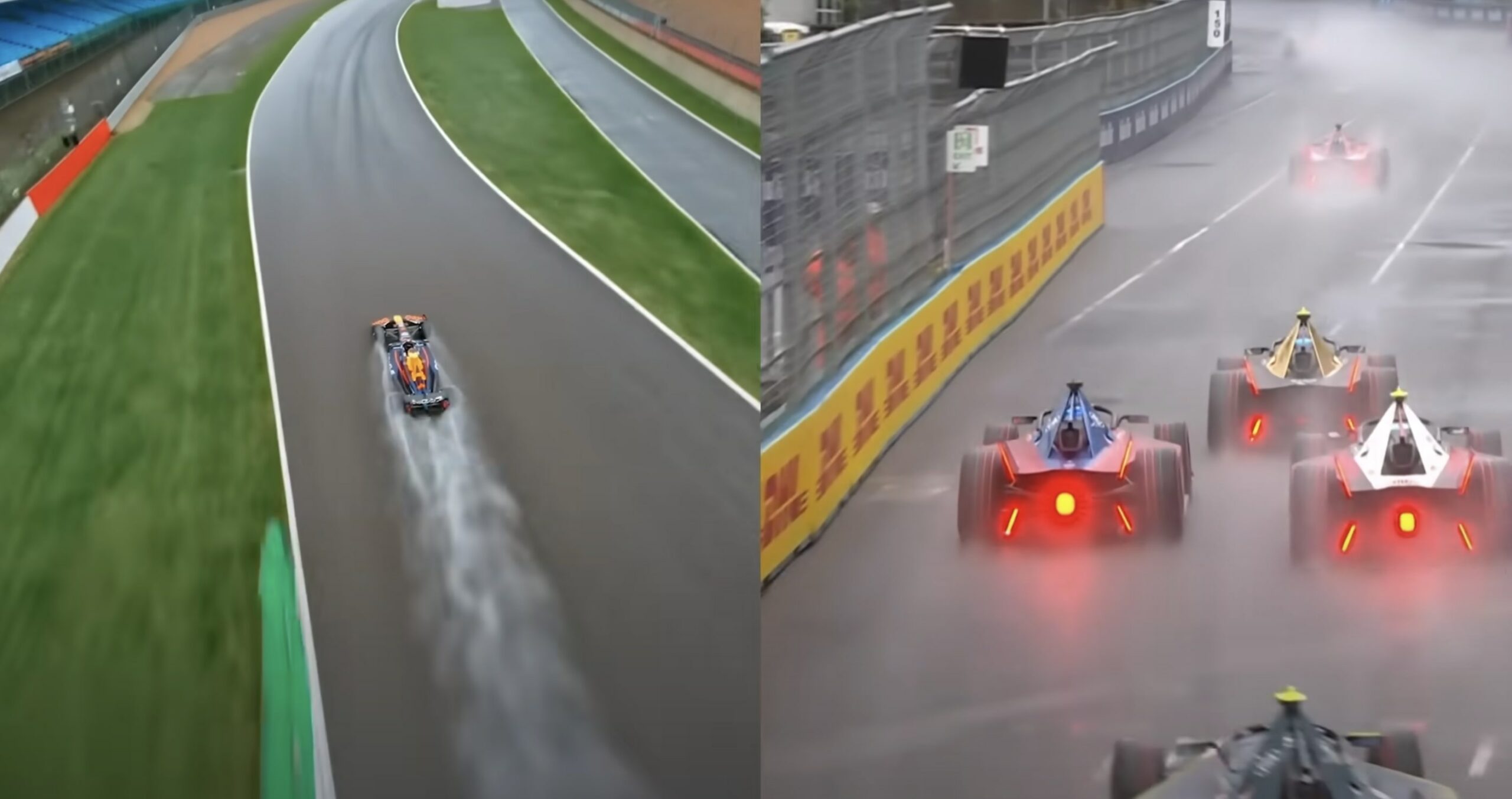
If you are betting on car races, this might be the year to put a stake on Formula E. There is a lot of innovation in both Formula 1 and Formula E in 2026, but one sport is moving forward, while the other, some say, heads backward.
First- Formula E: This is the quiet electric powered race that takes place on city streets and it is notably absent from the smell of gasoline and grease. It began in 2014 and now has a circuit with 18 races, 12 cities, and an average length of 50 to 60 miles. Innovation is happening quickly. There is a lot of boasting on the Formula E website: “ ‘Gen 4 cars’ provide 600kW of peak power, a 71% increase from 350W of Gen3.” These new specs make it sound like a perpetual motion machine: the claim is that 50% of the energy used during a race will be returned by regeneration (regen).
Formula E races are designed around electric power and energy management. The objectives are to conserve battery power and deploy it strategically across the duration of the race. The fastest cars now travel up to 200 miles per hour. And, they can go from 0 to 60 mph in ~ 1. 8 seconds, but of course, that will burn considerable energy.
THE F1 CONTRAST
In contrast, it takes a Formula 1 (F1) vehicle about 2.1 to 2.7 seconds for the 0 to 60 off-the mark and the race course is about 3 times longer. So, the F1 cars are optimized for high-speed acceleration and distance, not the jack rabbit launch.
For the time being, the Formula 1 and the Formula E race differ in multiple ways, but a crossover might be taking place. The FIA (Federation Internationale de l”automobile) manages both sports, and is moving beyond its 1904 directives.
GETTING SUSTAINABLE
Since 2019, the FIA has been making a case for sustainability and reducing the amount of fuel that F1 cars can burn. The use of hybrid batteries to boost power is not new, but now there are bigger tweaks. 2026 is to be the sea-change, as F1 cars are required to recover half of their energy from electrical power, and half from petrol.
It’s a sidebar worth noting, but the largest environmental challenge for the FIA is not from the cars that get 4 to 6 miles per gallon. Rather, the environmental issues stem from the logistics of moving the drivers, staff, and cars around the globe. However, the 2026 mandate for a 50/50 hybrid did have the appearance of making the FIA more in step with twenty-first century technology and its algorithms. There were other vehicle modifications too, namely the chassis, fuel mixture, and tires.
The initial reactions to the 2026 energy rules were mixed, both among drivers and fans. Diehards said that the F1 was becoming the “Mario Kart” race.
Best-known, winning drivers like Max Verstappen, protested with multiple concerns. Among them, these cars don’t feel safe, it is the on-board computer that is in control, and mostly, that learning to drive these vehicles (fast) has a steep learning curve. Other drivers, in fact Lando Norris, the champion who beat Verstappen in 2025, says the hybrid cars are “a lot of fun”… he adds…”you have to drive in a different way and understand things differently and manage things differently.”
REGEN TIME:
So in May, perhaps a nod to both sides, the FIA did a regression- or in the configuration of an electric motor, a regen. For 2027 races, the power rules will roll back. Vehicles will no longer have to extract the same level of energy from the hybrid battery. The revision sets a 60/40 split. Still, this is an improvement over the 80/20 hybrid standard that the FIA maintained for years.
From the sidelines, there are different ways to interpret this regen. Perhaps the FIA wanted to move forward, but their goals were too aspirational. Or, they risked alienating their seasoned drivers and teams, as well as the diehard fans. Perhaps they saw the future in Formula E racing. Clearly the FIA could not, as yet, push the sport into new territory.
But that’s where the winning bet for Formula E kicks in. Formula E racing is all about energy management, overcoming the steep learning curve to learn to drive differently, and always being quieter, faster, and cleaner. The everyday viewers watching on TV might agree as gasoline prices sky-rocket this year and electric cars “fall” back into favor. The E race might be edging ahead.
Comments
One response to “Which to bet on? Formula 1 or Formula E”
[…] new goal is efficiency and aerodynamics. You only have to look at Formula E racing for inspiration, where the winning vehicles use algorithms and code to lower watt-hours per mile […]