
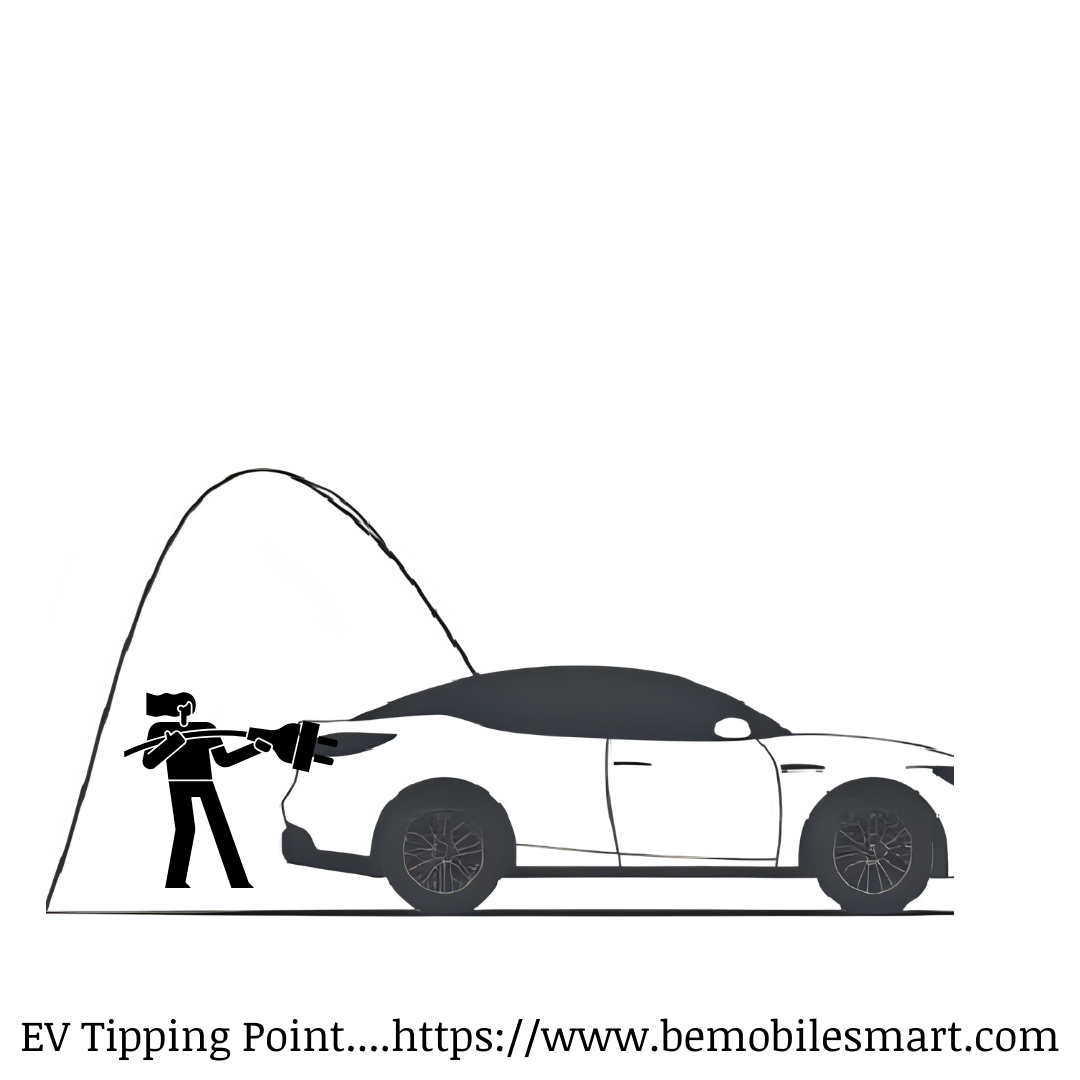
We may have reached the tipping point for electric vehicle (EV) adoption in Asia and parts of Europe but North America has not climbed that far. In fact, there is angst that we are now rocking backward. New tariffs, a mantra to drill for gasoline, and the phase- out of tax credits pitch tsunami sized waves towards the electric vehicle industry.
But there are ways to duck the tide and avoid the headlines. The 125 year old petrol industry has served us well but it does not have the ‘right stuff’ to move into the future. It’s not a renewable source of energy, so like the whales we once hunted for oil, the search begins for a new source. Moreover, once gasoline is emitted into the atmosphere through combustion, it’s gone,but the C02 is not. Battery powered cars (and our smartphones for that matter) can be taken apart after their useful life, and repurposed to build new batteries. The tipping point is in sight for a simpler, remanufactured future.
But here are some ideas to keep our eyes on that prize, particularly over the next few years:
- Evangelize today’s Electric Vehicle drivers: Customer studies of existing EV owners find that 90% plan to stay electric when they get their next car. They say that they are not going back to gasoline…” hate the smell of gasoline, it’s inconvenient, etc.” This percent is a high batting average that need to be prominently displayed. It will help gasoline drivers consider an EV for their next purchase since automotive polls show that many of them are seeking EV information.
- Humble the gas station: This country has an estimated 170,000 sites to refuel with gasoline and we should make it a priority to not build and permit more. And, we need reports about these individual sites and their safety. Are there underground toxins and groundwater contamination from the storage tanks? The scoreboard needs to visibly record the public health issues of drilling, transporting, and storing gasoline.
- Celebrate a Hacket: Morten Harket, an EV champion, is better known in Europe as the lead singer in the band, A-ha. In Norway, his home country, he played a pivotal role in the ‘90s raising awareness for electric vehicles. Thanks to his celebrity status, he and his friends got the attention of the Norwegian government and lobbied them to create tax breaks and green incentives. Today, 90% of new cars sold in Norway are fully electric and it has the highest number of EVs per capita.
- Relabel the real electric vehicles! If you had five boys, would you call each one a Henry- e.g. Henry I through Henry V? While that’s a Ford thing (pun intended), it’s easy for the public to confuse Silverado with E-Silverado, Equinox with E-Equinox and Mach-E- with Mach-1. The confusion is inherent. Decades of academic study on the diffusion of innovation confirm that visibility is a vital factor. In EV terms, this means that car shoppers are more likely to buy an electric vehicle if they see “other people” like them driving one. In California the diffusion rate is 25% but it could be even higher if EVs were more identifiable.
- Hold the timeline and price: It seems like there’s always a new solid state battery promised right around the corner, and a $25,000 “people’s EV” almost waiting to roll off the assembly line. Consumers are now promised in the next year or two a $25,000 Slate Truck, a $30,000 Ford pick-up, and the next generation of the compact Chevrolet Bolt. Postponing the innovations is a short term strategy: In the 1970’s Japanese automakers were able to make a more agile and fuel efficient car for the U.S. market as U.S. automakers dawdled. Today’s threat comes from Chinese EV manufacturers.
- Be Fleet Footed: Fleets are a natural choice for electric vehicles because they have fewer moving parts, around 20 vis a vis 2000, so they are cheaper to repair and operate. The vehicles can be built with fewer accessories and more uniform interiors, a bonus when it comes to skirting tariffs. Amazon, FedEx, and even the USPO are using more electric fleets and Ikea claims that 41% of its home deliveries are made with EVs.
- Demo Uber/RideHail: In the U.K. the parliament is updating bills that require all for-hire cars be electric by 2030 or 2035. In 2023 New York City decreed similar legislation but that is subject to change. There is an opportunity to encourage the ridehail companies to rent more EVS to drivers. This will take some degree of driver education in rideshare so drivers are familiar with how to pre-condition the EV battery and locate charging facilities between paid trips. Meanwhile, pilots for the autonomous vehicle, like those operating in Austin, Tx. and San Francisco, are introducing riders to electric vehicles.
- Get utilities on board: Electric vehicle technology brings greater energy independence and a higher level of national security when the electric utilities do their share. Electric utilities are planning for sharp demand from AI data centers and updated building codes. It’s still a novelty for EV drivers to cool their ice cream and groceries from their car. The next step, with battery backup, is to work alongside the utility companies to cool and power up their residence.
- Repurpose, recycle: Why do we throw out things that are valuable once we are done with them? But U.S. consumers do that over and over- when we get a new smartphone we put the old one in a drawer or toss it in the trash. We don’t give a second thought to where it will end up. But phones, and cars share have in common a lithium battery chocked with valuable minerals.
Old batteries in an electric vehicle have a second life. They can be repurposed either into data centers or resourced for lithium, copper, and other mineral content. This industry is just beginning, but the more we drive electric cars, the more batteries we have to go around, for the next round.
That’s important because if we use tariffs and exports to our advantage, and repurpose these batteries, we drive electric forward and reach the tipping point too.