
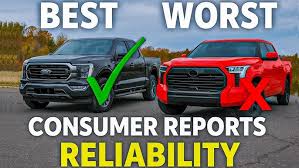
It will come as a surprise to electric vehicle (EV) owners that their cars have 80 percent more problems than gasoline vehicles. Thus reports the 2025 Consumer Reports (CR) annual vehicle review. It raises the specter that CR is not able to tweak their research methods to keep up with modern EVs. EVS are not a gasoline vehicle less a tailpipe.
But, readers of Consumer Reports who still drive gasoline cars are going to revel in their confirmation bias. EV fear and paranoia is real. EVs owners might want to discontinue their subscriptions, leading to even more selection bias for future CR studies.
Reading Between the Lines:
In case you missed it, the December 2025 issue of Consumer Reports makes the mistake of lumping plug-in hybrids with the full battery powered vehicles. As EV drivers know, hybrids are not similar. But one car does have bragging rights. For the first time, Tesla moved into the list of the ten most reliable cars, ranking in as number nine.
But if you stop reading there, you miss the curious part. Rivian, the EV, is dead-last unreliable, yet it has the highest customer satisfaction scores. 85% of Rivian owners say that they would buy this car again. Yet the car ranks first on lists of ownership cost, comfort, driving, cabin storage, and usability. For Tesla the repeat ownership rate is 69%, tying with Subaru. How is it that Consumer Reports (mostly) rates EVs as unreliable, yet so many plan to stay with the technology?
Put differently, what about Consumer Report ratings, rankles?
Counting…what..
There are a couple of issues to consider:
(1) Sample Bias: Survey validity depends on lots of factors.
Consumer Reports says their annual automotive survey involves ratings of 380,000 vehicles but they don’t report how many people they contact, and how many choose not to participate. The biggest problem is that the sample of EV owners is probably small, and naysayers are more likely to complete their survey.
The sample of EV owners is mission critical. Readers of the magazine are not representative. They are older, an affluent Boomer a generation that grew up with and loves gasoline cars.
(2) Apples to Oranges: The drivetrain of an EV has only about 20 moving parts compared to about 2000 in a conventional vehicle. Also, many of the categories that CR uses are not applicable to an electric vehicle, e.g. exhaust system, engine, transmission. A lively discussion on Reddit by the “electric viking” reports that over 5 million ICE vehicles were recalled for major engine failures in 2025, far surpassing any EV recall rate. Ford had the worst recall year in US history (110 recalls in 10 months and $6 billion in warranty costs), yet CR claimed Ford jumped to its best quality ranking in 15 years.
EV recalls are infrequent since updates are pushed over-the-air, similar to your smartphone. Over-the-air service is not a hassle for EV drivers, as their car stays on the road, not in the shop.
(3) Stale Data: Gasoline cars don’t change much from year -to- year so Consumer Reports can confidently report a 5 year history for a particular make and model. When a manufacturer changes a component, CR tracks the reliability, up or down. It’s completely different for electric vehicles because the technology is continually improving, particularly battery kWhs and software.
Consider, for example, the CR rating for the General Motors EVs. There is disappointment here but it’s also explainable. The CR methodology uses a brand’s reliability score to supplement prediction for a new model year. For GM, it means that the methodology would look back to the defective battery that led to a massive recall of all GM Bolt EVs. Now older Bolts have a brand new battery and a 100,000 mile warranty.
A backward seeking reliability can explain how the newest model, a GM E-Equinox, rates so poorly. It scores well below average in CR ranked reliability. But the marketplace is saying something different. The E-Equinox it is currently the best-selling EV in America after the Tesla Model Y and Model 3, and it has made Chevrolet the fastest-growing domestic EV brand.
Cognitive Dissonance:
Unless EV drivers are dense or drunk it’s hard to understand the dissonance in the data. On the one hand, the 2025 Rivian R1S continues to have a below-average brand reliability and a lower score on the road tests (see CR video). Yet Rivian owners enthusiastically say that they would buy the vehicle again and do not find the criticisms to be actual problems.
It does not take a degree in statistics to wonder where the discrepancy occurs.
The Smush:
There are lots of ways to ding a car, literally. It can be the fit and finish, mechanical parts that fail, or, increasingly, telemetric screens that do not connect with phones. When CR develops an overall score for makes and models, they interpret and ‘smush’ these factors together. These factors have more importance to the buyer of a staid gasoline vehicle vis a vis someone who is more excited by EV range, efficiency, and torque.
To get at reliability, CR’s keystone measurement, it would be simple to ask simpler questions to compare ICE and EV cars for a given year and mileage:
Here’s the 3 question, simple measure of reliability:
(1) How often did you bring your repair to dealership (or equivalent) for mechanical repairs this past year. How much did you spend there? Were these covered by warranty?
(2) How many hours (or days) was your car in the shop?
(3) How many times did you have to call for auto service or have the car towed? (exempting collisions). Was the car ever inoperable? (Why)
Way Beyond Fit & Finish:
With a valid sample, these short, factual questions can measure the differences, if any, between the reliability of gasoline cars and EVs. Currently, Consumer Reports ranks and rates vehicles with a lot more detail, weighting variables like the fit and finish, comfort, in-car electronics, and more. These criteria improve over 125 years of vehicle history. But they do not capture how EVs drive and the EV driver experience today.
Some EV drivers claim that when they shop for their next vehicle they will only consider one produced by a manufacturer that exclusively builds EVS (e.g. Tesla, Rivian, BYD). EVs made by conventional automakers, say Ford or Stellantis, are replicating gasoline cars and do not capitalize on the unique design of a battery operated vehicle. Legacy automakers are stuck in a Kodak moment…more like Consumer Reports and their rankings.