
A new study making the rounds claims the success rate for public electric vehicle charging is just 71%. It’s a terrifying number for anyone considering a $45,000 electric vehicle (EV)—who wants to buy a high-tech brick that can’t reliably refuel?
But before you send that headline to your gasoline-driving friends, it’s essential to look past the clickbait. This 71% finding clashes dramatically with more established reports, which show charger uptime hovering closer to 85% as we head into 2026. The 71% figure isn’t an outright lie—it’s just a strategic sleight of hand.
Even back in 2022, when this writer worked on the comprehensive Bay Area Charging Study, we were able to validate a higher success rate.
Feeding the Confirmation Bias Engine:
Results like this aren’t primarily searched for by EV drivers; they’re sought by those looking for confirmation bias: proof that EVs aren’t ready.
While the noise around 71% is loud, the reality on the ground is improving fast. The latest J.D. Power 2025 Study reports that only 14% of EV owners visited a charger without successfully charging—a significant 5-point drop in failure rates from the previous year. Record high levels of charging reliability were also reported by Paren for the 3rd quarter, 2025.
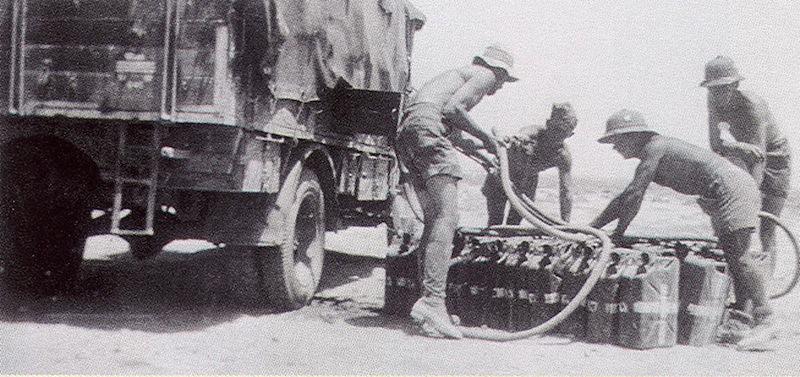
The infrastructure isn’t perfect, but it is hardly the logistical nightmare suggested by a low success rate. If charging stations were truly this unreliable, we’d have drivers carrying jerry cans of power, akin to Lt. Col. Dwight D. Eisenhower’s 1919 cross-country motor convoy, where the back of his vehicle was literally loaded with gasoline cans just to complete the journey.
The Red Flag: The New Metric
The controversial 71% finding comes from a 2025 annual report by ChargerHelp, a company founded in 2020. This is our first red flag: ChargerHelp is primarily in the business of maintenance and repairs for EV Service Equipment (EVSE). They have a commercial interest in highlighting equipment failures.
The second, and most important, red flag is the methodology. ChargerHelp created a new metric: the First-Time Charge Success Rate (FTCSR). This metric defines success only if the charging station connects instantly, on the very first try, like a gasoline pump.
This “gas pump standard” is simply inappropriate for today’s complex EV ecosystem.
Why Charging Fails on the “First Try” (It’s Not Always the Charger)
The 31% failure rate reported by the study isn’t solely caused by faulty hardware. It often results from the necessary, though sometimes tedious, pre-charge handshake between the driver, the vehicle, and the station.
More Red Flags:
Here are the key issues overlooked by the “first time charge success rate” (FTCSR) metric:
- Driver Feedback: The driver may need to update an app, validate a credit card, or resolve account issues—all of which require reliable cellular service, which isn’t guaranteed at every location.
- Car Communication: The vehicle must communicate its maximum charging speed and override any scheduled off-peak charging settings. In rare cases, minor software incompatibility occurs.
- The Tesla Factor: The study notably excludes Tesla Superchargers. Tesla accounts for over 50% of the entire network and is renowned for its seamless, “Plug and Charge” experience, which often simplifies the feedback loop. Excluding the most successful part of the network naturally skews the overall “success” number lower.
- Aging Infrastructure: The oldest stations (Level 2) are now five years or older and are more prone to software glitches. While this equipment needs to be upgraded, experienced EV drivers know to avoid these older, out-of-the-way units in favor of newer, high-amenity stations.
- Sentiment Analysis: : Sometimes it’s hard to determine the real time status of a station so information is gleaned from Plugshare and other reporting sites. But there is a problem with customer feedback, even when it is weighted. It is human nature to report more negative information than positive sentiment. Negative information “travels faster” too, and becomes more salient in product reviews.
The True Takeaway:
It is fair to say the U.S. doesn’t yet have the frictionless “gas pump” experience 100% of the time. Standardization is happening, led by the adoption of technologies like those championed by Tesla.
However, the 71% number is not an accurate reflection of charger reliability. It is a narrowly defined metric that lumps driver-side authentication issues and vehicle-equipment handshakes with catastrophic equipment failure. Sometimes charging requires a double handshake. Or, more like a Tesla network.
The ChargerHelp report makes for a great, fear-mongering headline—one that trade journals and a few media outlets like Forbes were quick to reprint.
But until the conversation changes, we’ll continue to have difficulty changing the minds of those who aren’t searching for a charging station, but simply for confirmation bias.