
“A Car for All Seasons” is not how we usually market electric vehicles. Buyers in cold Northern states first imagine getting a four -wheel drive SUV, not an EV. The shoppers in hot, desert climates consider a white sedan, or another sun-reflecting color, before they think about the suitability of an EV.
Yet EVs, when you probe into their DNA , have features that make them standout in harsh weather conditions. We’ll start with summer, as this is July, and EVs can provide a comfortable indoor cabin when the outside temperature sizzles. There’s ‘cold hearted’ irony here since the acronym for the 125 year old Internal Combustion Engines (gas cars) is ICE.
A Car for All Seasons: Summer
blowing cold:
It’s not a “blowing- in- the- wind” convertible, but an EV is usually more comfortable on a hot, summer day than the average gasoline car. That’s because they cool the cabin differently than ICE, and they are also more environmental. The primary difference is that the EV does not have to dissipate the residual heat from the engine, the brakes, and other operations. So the EV car gets cooler and stays cooler faster. The A/C system barely drops the efficiency, it is not a “range killer” if the outside temperature remains under 80 to 90 degrees Fahrenheit.
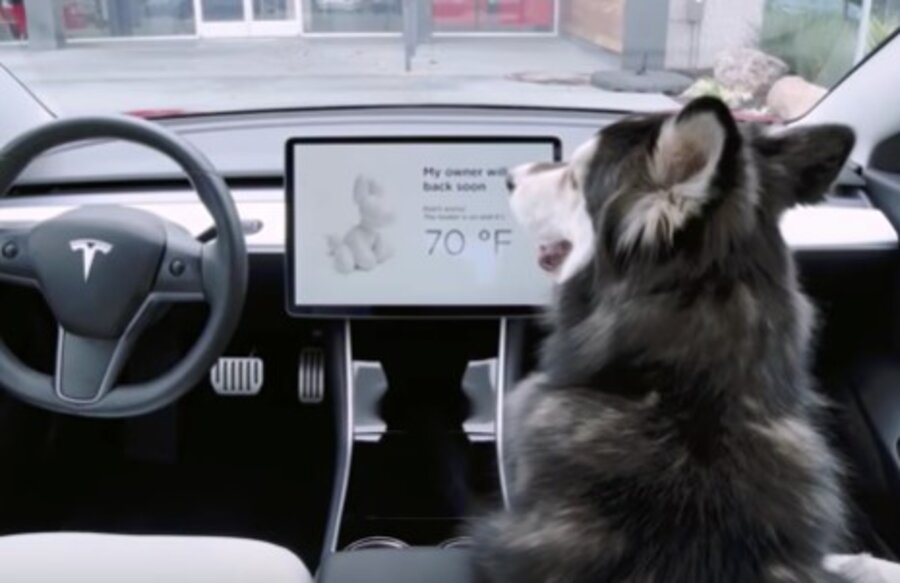
But a key advantage is that the EV can cool the passenger cabin before the vehicle is entered, and once the engine is turned off. There are owners who buy a Tesla “for the dogs” and they mean that literally. A/C settings can keep the cabin cool once the vehicle is parked and the doors are locked. Then the touchscreen displays the inside temperature and a message that the car is in Dog Mode. It can be a life-saver, well almost one, for a pet owner who has to run errands on a sizzling hot day. However, that has not always dissuaded naïve passers-by from taking action. Discussions on Tesla owner forums and Reddit mention owners returning to their cars to find a smashed window.
Other EV brands now offer “dog mode.” Owners return to find that the cabin is cool and the battery loss is insignificant. But since these vehicles do not have a visible message display it’s up to the driver to post a sign on the windshield and anticipate possible canine rescues.
But there’s another application for drivers in summer heat. Electric vehicles also provide a way to chill out the groceries. It’s not been promoted as widely as dog-mode, perhaps because groceries aren’t cute and automotive engineers know to stay clear of food safety. Cooling the car after the grocery shop is a good option if you have frozen or refrigerated items. Or, over a sweltering afternoon, this mode could protect phones and computers left in the car.
A Car for All Seasons: Winter
Blowing Hot:
When drivers try an electric vehicle for the first time they often comment that the ride is quiet and smooth….as if they move on velvet. Winter driving is anything but that, however on slippery roads, whether it’s rain, ice, or snow EVs hold their own because the batteries are large and heavy, and stacked underneath in the floor of the vehicle. This creates a low center of gravity. Like the mechanics of a race car, this helps the tires grip the road and reduces skidding. Compared to an ICE, there is also a more even weight distribution across the four wheels that further improves traction and handling.
If you’ve spun out in the snow, you know it’s tricky to control the gas pedal. With an electric vehicle and one-pedal driving, drivers have more degrees of control before the wheels lock up. Since the electric vehicle has almost instant torque, the vehicle is just faster to respond in treacherous conditions.
Naysayers of the technology remind us that EV batteries lose 20% to 30% of their charge in cold weather and do even worse in frigid snaps. Yet in Norway, where temperatures reach below 20 degrees (F) in winter, EVs represent over 90% of the new vehicle registration. Drivers in cold climes learn to condition their batteries by plugging them in before they travel, when they are still connected to the electrical grid. An overnight trickle charge is not a new idea for drivers in Minnesota and other Northern states too. Even their 12 volt batteries get optimized for the cold.
ICE Irony
The electric vehicle may well be the car for all seasons, but the popular press and social media are not going to help with that messaging. Two years ago, during the winter of 2024, the screens filled with pictures and stories of drivers in Chicago who had to abandon their vehicles when they would not charge in cold weather. There were sad pictures of frozen cars. But the reality was different- it turned out many were Uber or Lyft drivers who rented the vehicles from rideshare companies and didn’t have prior training. The drivers ran their vehicles down to a low state of charge, were not aware of the need to pre-condition the battery, and were disproportionately impacted because the outdoor charging stations failed.
Media stories and posts about electric vehicles “bricking” in extreme heat are less common. Rightly, there are pictures of open-air charging stations that have no canopy, light-blanched screen readers, and owners trying to find shade as they wait. This picture is a mixed bag though as Tesla has recently demonstrated in a near desert, that sunlight can power that charging station. They call it the ‘Oasis’- always a refreshing spot whatever the weather brings.