
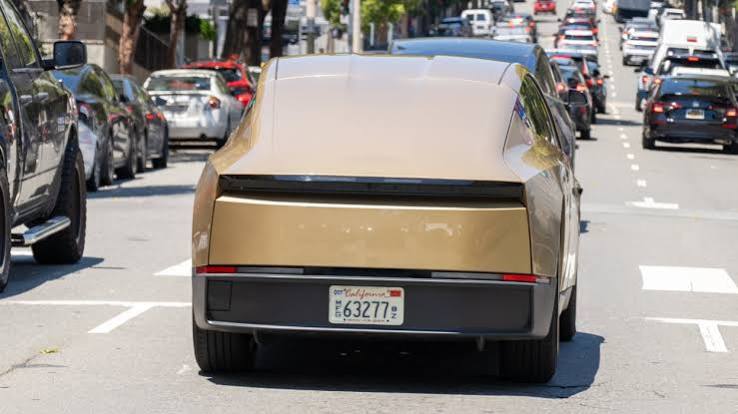
If you want to discern where electric vehicles are headed, don’t use the rear-view mirror. EV technology is advancing quickly. Yet public perceptions and media are anchored in earlier views. The rhetoric about charging speeds, cold-weather charging, and battery warranties continue to have a half-life even though their era has passed. Research publications and supply/demand studies are equally dated.
It’s obsolete (and misleading) to use data and projections about EVs, even from a few years back. The studies failed to factor in the global market, and faster uptake and infrastructure from overseas. The future arrived early. But the U.S. public has not caught on.
Experience Curves:
To fathom how the market changed so quickly, it’s useful to think about” experience curves” detailed by two twentieth century scholars. Theodore Paul Wright, an aeronautics engineer, proposed that “we learn by doing” and unit costs drop as scale increases. Everitt Rogers, a communications researcher, also studied experience curves and is credited with “the diffusion of innovation.” Today, these insights help explain why the technology moves fast, but public opinion does not.
There are still millions of Americans, perhaps the majority, who believe that electric vehicles are more expensive than gasoline vehicles. Visits to most Ford or GM dealerships, and even Toyota showrooms, will not easily dispel that opinion. Automakers are currently bulking up on dual-powertrain vehicles (e.g. hybrids) and these are indeed more expensive to produce (and repair). The few EVs on the lot are often older models, shunted to the side.
Change Abounds:
Nonetheless, global manufacturing and global sales chip away at the costs of battery electric cars. They are easier to produce as have 20 moving parts instead of 2000. Battery prices have continued to drop. Even in the U.S, there are at least four full-range, lightly equipped EV models that sell for under $35,000. The ongoing “Great Return,” has loaded the secondary market with low-mileage EVs coming off -lease.
EV cars will continue to get cheaper as the borders for the EV market get closer. Today, both Canada and Mexico allow some Chinese imports. In the near future, “sticker shock” might apply to the big SUVs and luxury vehicles that run on gas, not the tidier electric vehicles.
Early and Late Majorities:
Looking at EVs from the social/cultural lens of Everitt Rogers, electric vehicle owners are moving beyond “early adopters”. “Late majority” now describes trends in Norway, and perhaps “early majority” in parts of Europe as drivers switch from pricey gas and diesel. Although visitors to Europe and Asia see far more gasoline cars on the road than EVs, that’s because it takes an entire life-cycle to replace existing vehicles. The average (gasoline) car stays in service for over 12 years unless smog rules and taxes make it too expensive to keep.
Still, in many parts of the U.S., drivers are not likely to believe that the EV evolution has arrived. On their daily trip- taking EVs do not stand out and they might easily mistake one for a regular gas car (e.g. the confusion between models of an E-Equinox vs. gas Equinox). Nor are they likely to be noticing the growth of public charging stations. These oversights reinforce a belief that only early adopters and “risk takers” are buying the electric vehicles. In big urban areas, primarily on the two coasts, Austin,Texas, and Florida, EV sales are high. There, everyday drivers of gasoline vehicles are more likely to perceive that a “late majority” are coming on-board.
If car-shoppers got more curious, they would find reasons to avoid looking backwards into the rearview mirror. In addition to price parity, charging speeds have doubled, the heat pump is putting to rest “winter range anxiety”, and the 100,000 mile battery warranty is standard. But gasoline-vehicle drivers are not so curious, and these innovations are not so visible. More likely, these improvements are known to EV buyers who are now settled into their second or third EV purchase.
Wright/Rogers/Ogburn:
So, while EV technology continues to scale elsewhere (per Wright) the diffusion curve, at least in the U.S., is slower to follow (per Rogers). A fellow social scientist, William Ogburn (1886-1959 ) studied social trends that might explain the gap: “technology and physical infrastructure change much faster than beliefs, habits, laws, and public perception.”
Domestic car shoppers formed a mental model of the electric vehicle between 2014 and 2024- a time when EVs were indeed more expensive, slower to charge, and laden with cold-weather travails. The early-adopters (per Rogers) jumped on board. Now, as the hardware and software improve and the cost of production is driven down (per Wright), mental models remain anchored in an earlier period (per Ogburn). The answer, oddly personified by the new gold colored Tesla Cybercabs designed without a back window, is to avert the rear-view mirror.