
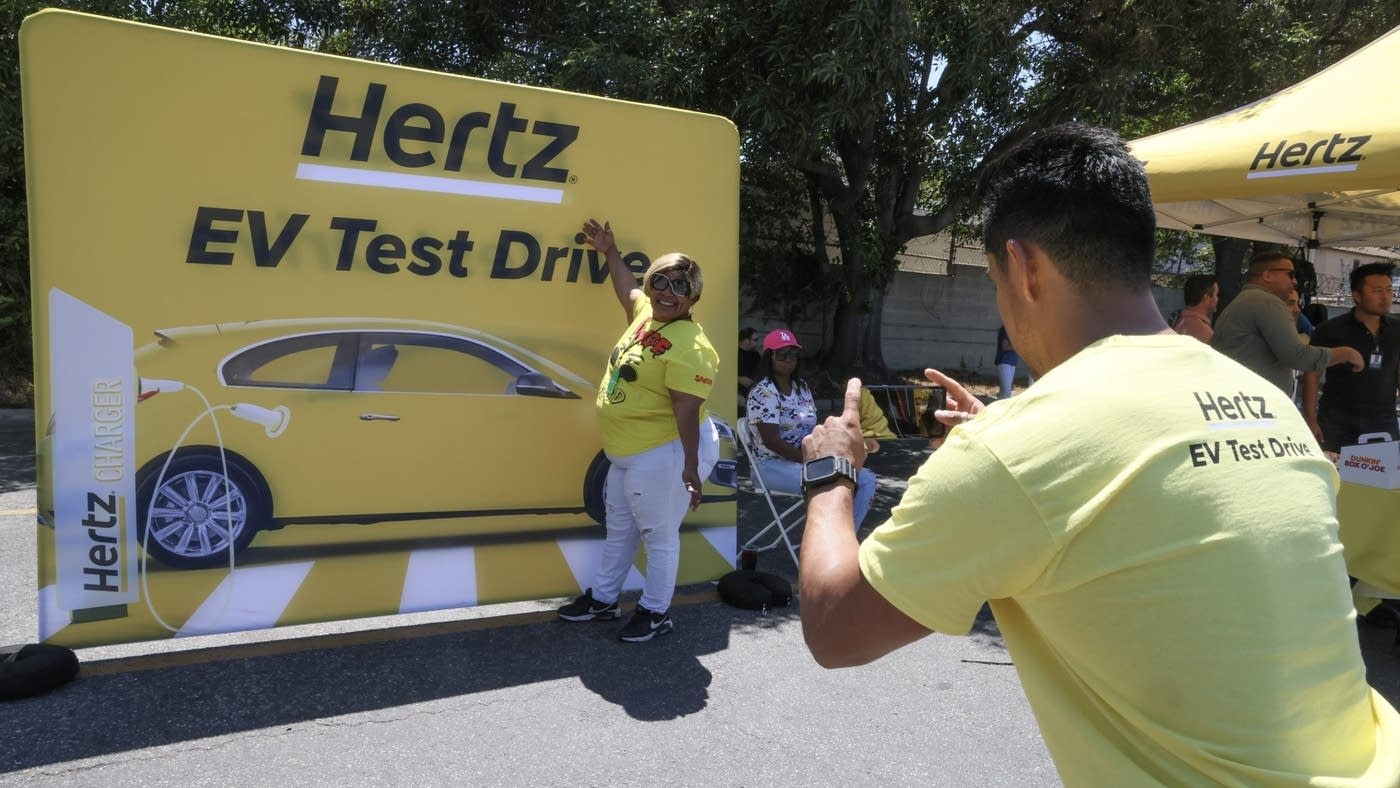
When gasoline drivers want to test out an electric vehicle they can drive a friend’s car or rent an EV for a day or two. Renting should be more informative than the 15 minute ride with the eager salesman proselytizing from the jump seat. But renting an electric vehicle (EV) is the worst way to fall in love with one.
Here’s the catch: EVs are more like smartphones than cars. If you remember the first time you switched to a smartphone, you didn’t just turn it on and go. You had to set up an ID, download apps, configure privacy settings, and learn a completely new touch interface. It took a week to feel natural. Your second and third phones were easy, but that first one? It was a project.
Renting an EV for a 3-day business trip or a family vacation can skip the “setup” phase and go straight to the “frustration” phase. If you’re looking to evaluate the big switch from gas to electric, here is why a rental might actually give you the wrong impression:
1. The “App-to-Hip” Connection
Most EVs are designed for a long-term relationship with your phone. In a Tesla, your phone is the key; in a Chevrolet or Ford, apps are essential for locating compatible chargers and pre-conditioning the cabin. When you rent, you’re often locked out of this ecosystem. You’re using a “dumb” version of a “smart” car. And, if you are travelling, you may not even have the opportunity to successfully download apps without getting an error message.
2. The Loss of Predictability
In a gas car, adjusting the mirrors or lights is predictable, whether you’re in a Nissan Versa or a Ford Mustang. In an EV, many of these functions have migrated to the touchscreen.
- The “Previous User” Trap: If the last renter customized the ambient lighting to neon purple or set the mirrors to fold at odd times, you’re left troubleshooting software instead of driving.
- Someone else’s customization can get in the way of a stress-free, easy driving experience
- Safety Barriers: Trying to find the “fog light” setting in a sub-menu while driving a rental in a strange city is a recipe for a high-stress experience.
3. Re-learning Physics (Torque and Regen)
Gasoline drivers have decades of “muscle memory.” EVs break those habits in two ways:
- The Jack-Rabbit Effect: Instant torque means you’re off the mark like a racing car, which can be jarring in stop-and-go rental traffic.
- One-Pedal Driving: Regenerative braking is a “plus” for owners, but for a first-timer, the car slowing down the moment you lift your foot feels unfamiliar and scary, rather than efficient.
4. The “Inverse Range” Paradox
No one at the rental desk tells you that electric vehicle efficiency is the opposite of a gas car.
- Gas: Better on the highway, worse in the city.
- EV: Range improves in stop-and-go traffic and drops significantly at speeds above 75 mph. For a business traveler rushing across a state highway, that 360 mile range can vanish much faster than expected.
5. Lots of Screen Time
There’s a recent study published by MD’s and public health experts making headlines about distraction and car screens. In their research, investigators looked at whether intensive use of in-car Spotify downloads led to more traffic fatalities as drivers took their eyes off the road. Like a smartphone, many EVs require a screen interface, even for functions like backing- up. Again, for gasoline vehicle drivers this may require relearning ingrained habits.
6. The “Skeuomorphism” of the Pump
We expect charging to look like a gas station, but it doesn’t. Beyond the physical weight of a CCS hose, the payment infrastructure is still a work in progress. While companies like Nayax are working to standardize “tap-and-go” credit card payments, many chargers still require specific apps or memberships. For a one-time renter, this turns a 20-minute “refuel” into a 40-minute tech support call.
7. The Return Conundrum
EV rental cars do not have a long extension cord that follows them around. In a way, gas cars do and it’s called the gas station. When travelers rent from an airport location they know that they have to return the vehicle with either a full tank of gas, or pre-pay for one. Electric vehicle renters face a conundrum. They are unlikely to find a close by charging station near the rental return and they may worry about running on an empty battery.
It gets worse, because, investing 20 or 30 minutes to refill the car at a charging station assumes that there will be a free stall with a working charger. Then, comes the expectation that the credit card reader accepts the payment. Even today, a rental return with charging is not guaranteed to be seamless.
Thinking Forward:
Until both renters and rental companies work through these issues, there will be setbacks when electric vehicles are put in the short-term rental market. The EV cars are particularly unsuited for business travelers and visitors unfamiliar with a locale.
Many readers will recall that the Hertz company dipped its toe into short-term rentals back in 2021, and exited it in 2024 .They suffered multi-million dollar losses. Hertz had difficulty servicing and maintaining the rental vehicles, and they probably over-estimated the demand for them. The estimated ~40,000 Tesla and other EV models they acquired were greatly welcomed in the resale market.
So there’s a flip side to that story. Rental customers are more informed than corporate America. They shun renting these cars. They knew, unlike Hertz, that EVs are not optimal for a short-term rental, yet much better to own over the longer-run. Once a home-charger is installed and settings are saved, an electric vehicle is a personal extension, much like the smartphone.